
How to Keep Your Tiffin Fresh and Safe Until Lunch
Packing lunch for work, college or school is a convenient way to organise your daily meals. However, food can lose its freshness, texture and quality when it is packed incorrectly or kept under unsuitable conditions for several hours.
Knowing how to keep food fresh in a tiffin can help you develop better packing and storage habits. From choosing the right lunchbox to keeping hot and cold foods at suitable temperatures, a few simple steps can make your everyday lunch routine more practical.
1. Always Start with a Clean Tiffin Box
Before packing your lunch, make sure your tiffin box is properly washed, clean and completely dry. Food particles and moisture left inside a container can create hygiene problems.
Wash your lunchbox after every use, including its lid, corners, compartments and rubber seals. Use clean utensils when transferring cooked food into the container.
Also wash your hands before preparing or packing meals. The Food Safety and Standards Authority of India (FSSAI) recommends maintaining clean hands, utensils and food-preparation surfaces as part of safe food practices.
2. Choose the Right Food-Grade Container
Your choice of lunchbox can make a difference to how conveniently you carry your food.
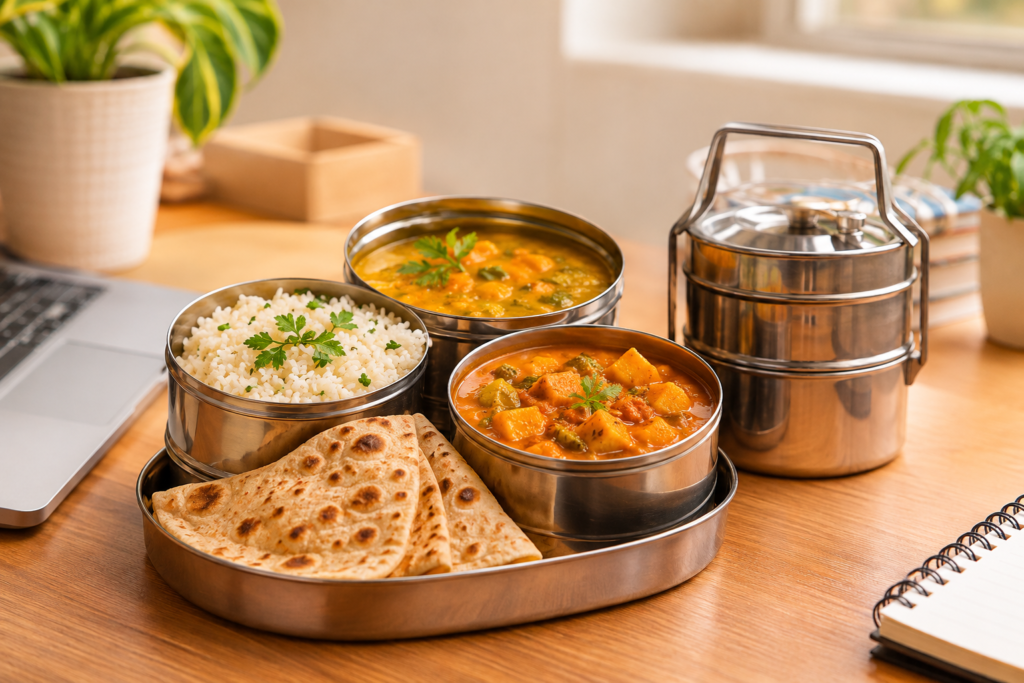
Stainless-steel tiffins are a practical everyday option. You can also use containers made from food-grade materials that are suitable for the type and temperature of food being packed.
Look for these features:
Secure lids that help prevent leakage.
Separate compartments for different dishes.
Easy-to-clean corners and seals.
Materials intended for food contact.
A suitable size for your meal portions.
Avoid packing hot food in low-quality plastic containers or wrapping chapati and paratha in newspaper. FSSAI’s food-safety guidance recommends steel or food-grade plastic lunch containers and advises against using newspaper for packing food.
3. Keep Hot and Cold Foods Separate
Different foods need different storage arrangements. Hot cooked meals and chilled foods should not be packed together without considering their temperature requirements.
For hot meals such as dal, rice, curry or soup, use an appropriate insulated food container designed to retain heat. Follow its manufacturer's instructions and keep the lid closed until serving.
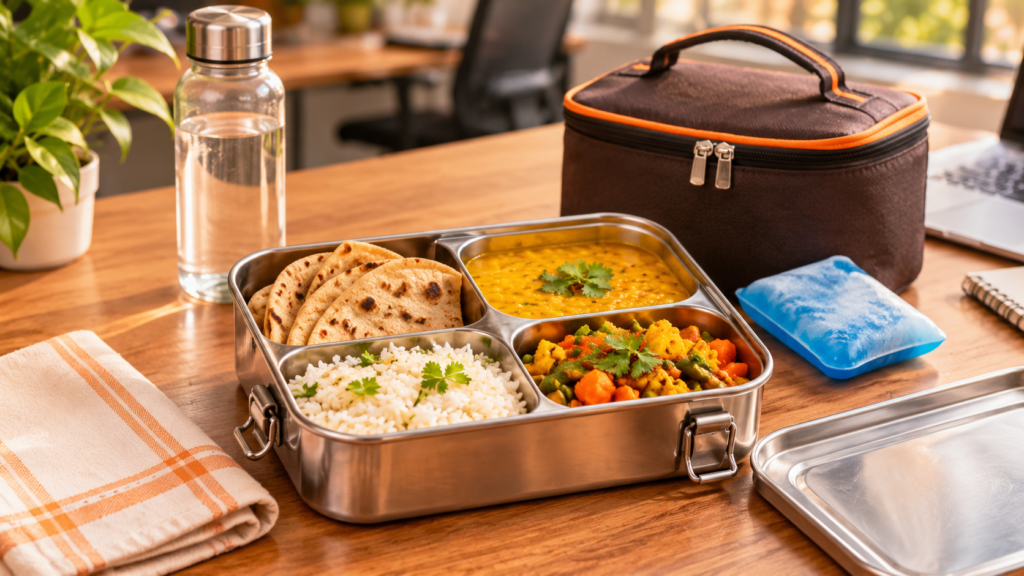
For foods that need refrigeration, keep them chilled before leaving home. An insulated lunch bag with frozen gel packs can help keep perishable foods cold during transport. The USDA recommends using at least two cold sources when packing perishable lunches
Avoid assuming that an ordinary lunchbox will maintain a safe temperature for several hours.
4. How to Keep Food Fresh in a Tiffin: Storage Time and Temperature
Temperature is one of the most important parts of lunchbox food safety.
FSSAI's Eat Right handbook advises that cooked food should not be left at room temperature for more than two hours. It also recommends refrigerating cooked and perishable foods and keeping cooked food hot before serving.
If you reach your workplace or college and refrigeration is available, store perishable food in the refrigerator promptly. When carrying a cold lunch, use suitable insulated storage and cold packs.
If your food has been left under unsuitable conditions for too long, do not assume it is safe just because it looks or smells normal. When you are unsure about its safety, discard it rather than tasting it.
5. Pack Different Food Items Separately
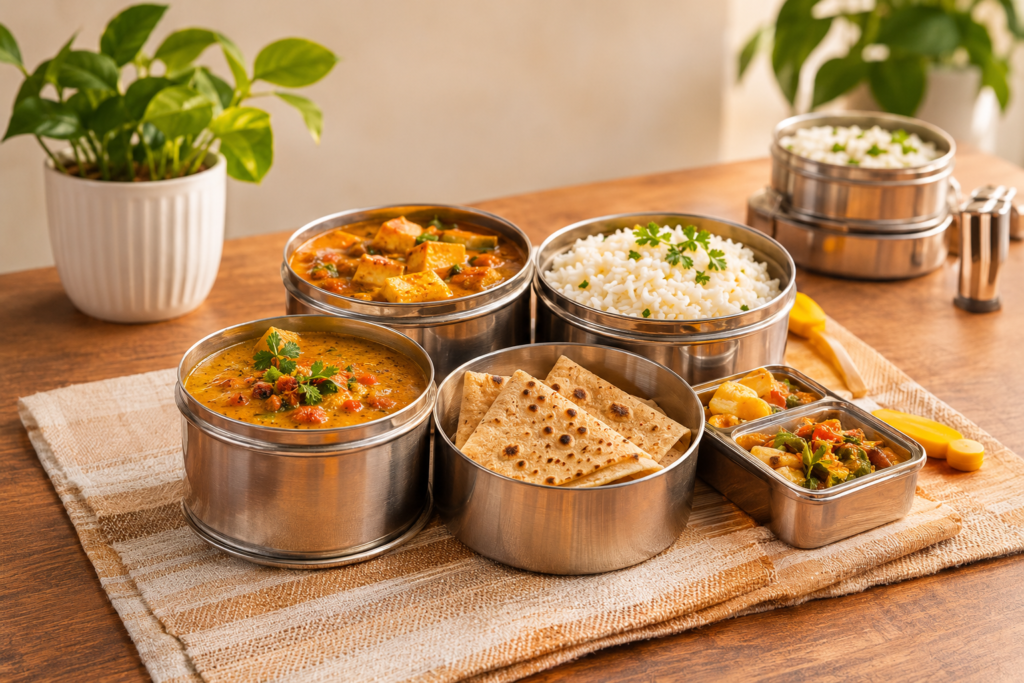
Separating food items helps maintain their taste, texture and presentation.
For example, packing dal directly over roti may make the roti soggy. Similarly, adding salad to a warm curry compartment can affect its freshness.
Try these simple packing tips:
Keep roti or paratha in a clean, suitable dry compartment.
Pack dal, curry and gravies in leak-resistant containers.
Keep salad and cut vegetables separate.
Carry chutney, sauces and curd in small sealed containers.
Avoid overfilling the lunchbox.
This arrangement makes it easier to enjoy each part of your meal when lunchtime arrives.
6. Carry Your Lunch in an Insulated Bag
An insulated lunch bag can be useful when travelling to work or college, particularly for meals that need temperature control.
Choose a bag that is easy to clean and large enough for your lunchbox and any required cold packs. Keep it away from direct sunlight and other hot environments.
If your workplace has a refrigerator, use it when you arrive for foods that need to remain chilled. For hot meals, use an insulated container suitable for hot food rather than relying on an ordinary bag.
Clean the inside of your lunch bag regularly and allow it to dry completely before using it again.
7. Build a Better Lunch-Packing Routine
A consistent routine can make packing everyday meals easier.
Wash your lunchbox after using it, check the lid and seals, prepare your food with clean utensils and organise your meals before leaving home.
You can also prepare a small checklist:
Is the lunchbox clean and dry?
Are the lids properly secured?
Are hot and cold foods packed appropriately?
Have the required insulated containers or cold packs been included?
Can perishable food be refrigerated or kept at a safe temperature until lunchtime?
These checks help you pay attention to food hygiene, packaging and storage instead of focusing only on convenience.
How to Keep Your Tiffin Fresh and Safe Until Lunch Read More »